
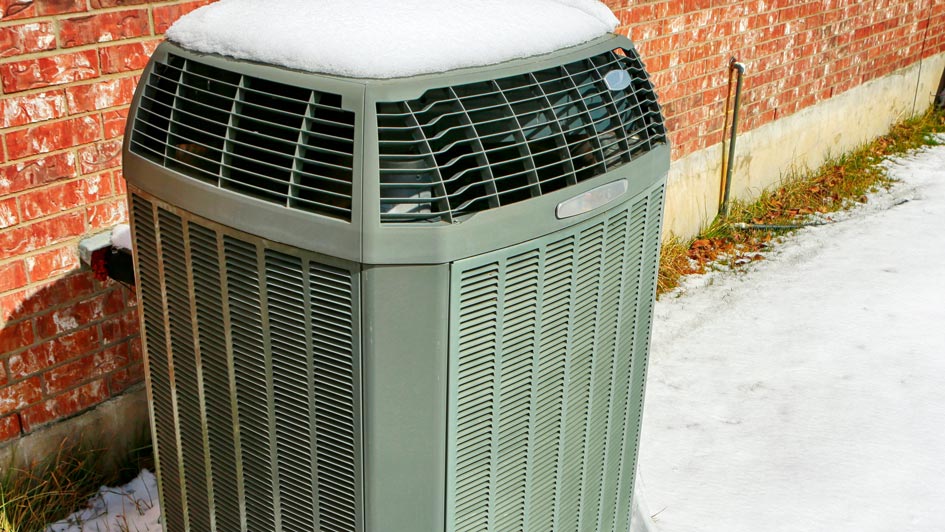
As the {hot|scorching|sweltering} summer {sun|sunshine|heat} starts to fade and the {relief|refreshingly cool weather|cooler temperatures} of fall starts to settle in, residents of start preparing their homes and yards for the {winter|wintertime|the upcoming cold weather}. For many, that leads to the question of whether they {should|need to|ought to} cover their {outdoor|exterior|outside} {air conditioning unit|AC|air conditioner} for the winter.
While it may seem like a {good|great|smart} idea, {the truth is|the reality is|the fact is|in reality} there are {several|many|a number of|multiple} reasons why you shouldn’t cover your AC unit in the winter. {In addition to|On top of|Along with} not being {necessary|needed|something you need to do}, covering your outdoor air conditioning equipment can {actually|even|sometimes} cause problems.
Here, the {experts|specialists|professionals} at HVAC Co. share five reasons why covering your {air conditioner|air conditioning equipment|AC} doesn’t need to be on your fall to-do list and what you should do instead.
1. {Snow won't Hurt Your AC|Your AC Unit Isn’t Damaged by Snow|Your AC can Handle Snow}
{Outdoor|Outside|Exterior} AC units are {designed|supposed|built} to withstand harsh weather conditions like snow in the {winter|wintertime|winter season}. These {units|systems|machines} are built with {durable|sturdy|solid} materials and {components|hardware|parts} that can handle the outdoor elements without damage. The coils and fins of the unit are {constructed|engineered|specially developed} to resist corrosion, and the housing is {designed|crafted|manufactured} to protect the internal {components|elements|parts} from moisture and debris.
2. {Covering AC Systems can Encourage Mold|Covering Your Air Conditioner Can Cause Mold|Covered AC Systems may Encourage Mold Growth}
One of the reasons you {shouldn’t cover|should not cover|should avoid covering} your {air conditioner|AC unit|outdoor air conditioning equipment} in the {winter|cold months|wintertime} is because doing so can trap moisture—which is {the opposite of|definitely not|not at all} what you want in your outdoor unit. That’s because {sealing moisture|allowing moisture to collect|trapping moisture} inside the unit {creates|generates|produces} the perfect conditions for mold and mildew to {thrive|flourish|spread}.
Mold and mildew not only have {an unpleasant|an undesirable|a bad} {odor|smell|aroma}, but they can also {pose|create|present} health risks, especially for {people|individuals|household residents} with respiratory issues or allergies. {Additionally|Also|Plus}, the {trapped|excess|unwanted} moisture can corrode the internal components of the AC unit.
{Instead of|Rather than|As an alternative to} covering the unit, instead {ensure|provide|make sure the unit has} proper drainage and keep the area around the unit {clear|free|cleared|clean} of debris, allowing for efficient airflow and preventing moisture buildup.
3. {Covered AC Systems|A Covered Air Conditioner|Your Covered Air Conditioning Unit} Can {Host|Attract} Animals
{Humans|People|Human beings|You and your family} aren’t the only ones who {prepare|get ready|make plans} for winter. Animals that live around your home are also {looking|searching|hunting} for a warm, cozy place to {crash|live|hide out} for the {winter|wintry|cold} months. For many {animals|creatures|critters}, a covered air conditioner is {the perfect|an ideal|an awesome} winter {home|dwelling|refuge}.
Birds, mice, chipmunks and even rats {often|frequently|commonly} make {nests|homes|winter dens} inside covered air conditioners. Animals {living|residing|dwelling} in a covered {air conditioning unit|air conditioner|AC unit} can cause {numerous|many|several} problems. {Rodents|Rats|Mice} can chew through wires, insulation and other {components|connections|parts}, causing damage that may require {costly|pricey|expensive} repairs. Debris animals bring into the AC to {create|construct|make themselves} a warm and comfortable {bed|home|place to get out of the cold weather|nest} can {obstruct|block|impair} airflow and ventilation, {reducing|limiting|decreasing|lowering} the efficiency of the {unit|appliance|AC} and potentially causing it to overheat. {Additionally|In addition|Moreover}, animal {droppings|waste|excrement} can result in unsanitary conditions and {foul|bad|potent} odors.
Leaving your air conditioner uncovered helps {deter|discourage|dissuade} {animals|wildlife|creatures}, because an uncovered AC {offers|provides|gives them} less shelter from {the elements|cold weather|chilly temperatures} than a covered unit. That’s better for your {air conditioner|AC|cooling system}—and leaves you with less mess to {clean up|pick up|throw away} and things to repair {in the spring|when winter is over|once the snow melts}.
4. {An AC Cover|A Winter Cover for AC Units|Covering Your Air Conditioner} Restricts Airflow
Another reason {not to|you shouldn't|it's better that you don't} cover your {air conditioner|air conditioning equipment|AC unit} in the winter is because a cover {restricts|limits|blocks} airflow through the unit. {Proper|Adequate|Suitable} airflow is {crucial|vital|essential} for the AC system because it {helps with|facilitates|assists} heat exchange and {allows|enables|permits} the unit to cool {effectively|efficiently|properly}. When airflow is {restricted|reduced|constrained|severely limited}, the system has to work harder to {maintain|achieve|reach} the desired temperature, {leading to|resulting in|causing} {increased|greater|additional} energy consumption and strain on the components.
In addition, if you {turn on|run|use} your {AC|air conditioning|air conditioner} without {realizing|knowing|noticing} that the {outdoor|outside|exterior} unit is covered or because you simply forgot, it could result in a range of problems. One issue is that the {lack|shortage|absence} of {proper|appropriate|correct} airflow could cause the compressor to overheat, {leading to|causing|resulting in} its failure or damage. That’s why it is {essential|crucial|vital|necessary} to ensure the outdoor unit {is free from|has no|is always cleared of any} {obstructions|blockages|barriers} and is not covered to maintain {optimal|maximum|the best possible} airflow.
5. AC Maintenance {Offers More Benefits|Works Better|Is More Effective} Than Covering Your Air Conditioner
The bottom line is, it's {a lot|a whole lot|lots|much} more effective to do a little maintenance for your {air conditioner|cooling system|air conditioning unit} than to cover your {outdoor|outside|exterior} AC unit.
There are {several|a number of|numerous} key maintenance {tasks|activities|projects} you should prioritize to ensure {optimal|maximum|the best possible} {performance|operation|function} and longevity of your AC unit. First, it’s {a good idea|wise|smart} to {inspect|examine|check|look at} your outdoor AC unit regularly and {remove|get rid of|pull out|clear|remove} any debris such as leaves, {small branches|twigs|sticks} and dirt to {maintain|allow|promote} proper airflow. Second, {check|inspect|examine} and clean the coils, fins and filters to make sure {they are free from|there isn't any|you don't see any} dirt and dust buildup that would {hinder|impede|prevent} {efficient|effective|successful} heat exchange or airflow.
{Regular|Scheduled|Routine} air conditioning maintenance not only {enhances|boosts|improves} efficiency, but it also helps extend the unit's life span, {reduces|decreases|lowers} energy consumption and {prevents|avoids|protects against} costly repairs. Rather than using a cover, {investing|committing|putting} time and effort into routine air conditioning maintenance is a proactive {approach|strategy|plan of action} that can {significantly|greatly|substantially} benefit your entire HVAC system in the long run.